Cross-cutting Group 2: Democratic Landscape Transformation
Coordination
Ellen Fetzer & Anna Szilágyi-Nagy (LNI, HfWU, CABULAND) and Guilherme Braga (Landscape Laboratory)
The working group on ‘Democratic Landscape Transformation’ is designed as a training programme addressing academics, professionals, NGO-practitioners and engaged citizens in an integrated learning process in and with the landscape of Guimarães.
The programme is supported by the CABULAND project (ERASMUS+). Participants will combine online training and onsite activities during the landscape forum. The programme translates into 5 credits in the ECTS system.
Purpose and positioning of this programme with the forum
This training programme builds capacity for democratic landscape transformation among professionals, academics, public administrations, community initiatives, and engaged citizens in Guimarães and its urban–peri-urban territories.
Grounded in the values and approach of the Charta for Democratic Landscape Transformation, our programme is designed as a living learning process rather than a conventional course. Participants will learn in and with the landscape, engaging directly with local actors, places, tensions, and opportunities in Guimarães as European Green Capital 2026.
Thanks to the ERASMUS programme, this training is free of charge for participants. The programme language is English.
Learning Objectives
After completing the programme, participants will be able to:
- Understand and apply principles of democratic landscape transformation
- Use integrative and co-creative methods in real spatial and community contexts
- Work collaboratively across disciplines and social roles
- Reflect critically on power, inclusion and justice in planning and design
- Engage with socio-ecological challenges through place-based learning
- Strengthen their capacity for democratic leadership
Programme elements
- Online accompanying learning (aligned with the OLA online programme April-July)
- On-site immersive training during the Landscape Forum in Guimarães.
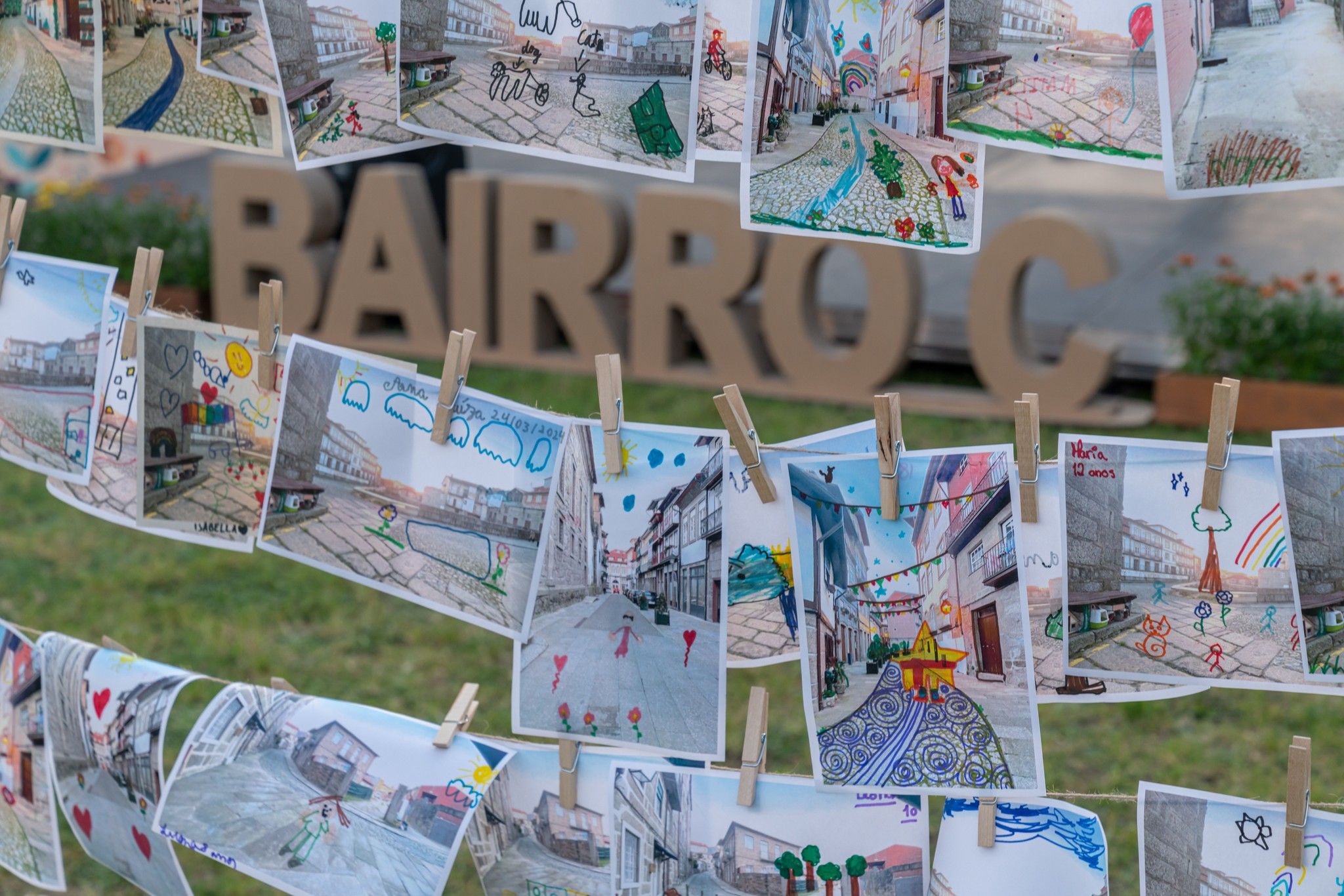
- Community-based co-creation
- Transfer of innovative participatory methods from four European organisations: LE:NOTRE Institute, Commonspace, Kulturaktiv & Landscape Laboratory
Our educational setting:
The programme is explicitly based on the following principles:
- Learning in and with the landscape
- Co-creation rather than consultation
- Inclusion of diverse knowledges (academic, experiential, cultural, ecological)
- Landscape as a commons and a right
- Reflexivity on power, justice, equity, and representation
- Practice-oriented learning through real-world engagement and partnership
- Collective creativity, storytelling, mapping, and situated experimentation
Methodologically, the programme blends:
- Participatory Action Research & Living Lab approaches
- Landscape-based systems thinking
- Collective visioning
- Prototyping as engagement
- Landscape storytelling
- Reflexive practice
Target groups
Our training is designed for diverse learning groups, intentionally bringing together:
- Urban, landscape and spatial planning professionals
- Architects and designers
- Academics and students
- Civil servants and public administration staff
- Local community initiatives and NGOs
- Cultural actors and artists
- Engaged citizens and activists
This diversity is treated as a learning asset, mirroring the multi-actor ecosystems required for democratic landscape transformation.
Structure of the Training Programme
Phase 1 – Online Preparation (April 2026)
We build a shared conceptual foundation, introduce methods, and connect participants before arriving in Guimarães. 4 online sessions (90 minutes each), combining inputs, dialogue, and small-group work (aligned with the OLA online programme)
Phase 2 – On-Site Training (Guimarães, May 6–9, 2026)
We engage actively in and with the Living Lab embedded in Guimarães during the Landscape Forum. Participants become part of a community of practice co-learning with local actors. There will be four thematic lenses on participation and co–creation, in line with the forum working groups: (1) The River Landscape (focus on youth participation), (2) Foodscapes (focus on food system actor networks), (3) Experiential landscape (focus on artistic approaches), (4) Tourism and recreation (focus on transdisciplinary co-creation)
On-site phases:
- Arrival and grounding in place
- Methods in action
- Co-creation with the local community
- Sharing, reflection and future pathways
Phase 3 – Follow-up (mid-May – June 2026)
Participants continue the online course on Democratic Landscape Transformation to deepen their understanding. They finalise their individual learning journals.
Expected results
- Individual learning journals
- Collective maps
- Stories from the landscape
- Documentation of methods
- Reflections on participatory processes
…all feeding into the Landscape Forum documentation.

The CABULAND small-scale partnership is funded by the European Union. Views and opinions expressed are however those of the author(s) only and do not necessarily reflect those of the European Union or the European Education and Culture Executive Agency (EACEA). Neither the European Union nor EACEA can be held responsible for them.